Subfloor preparation in Tampa Bay.
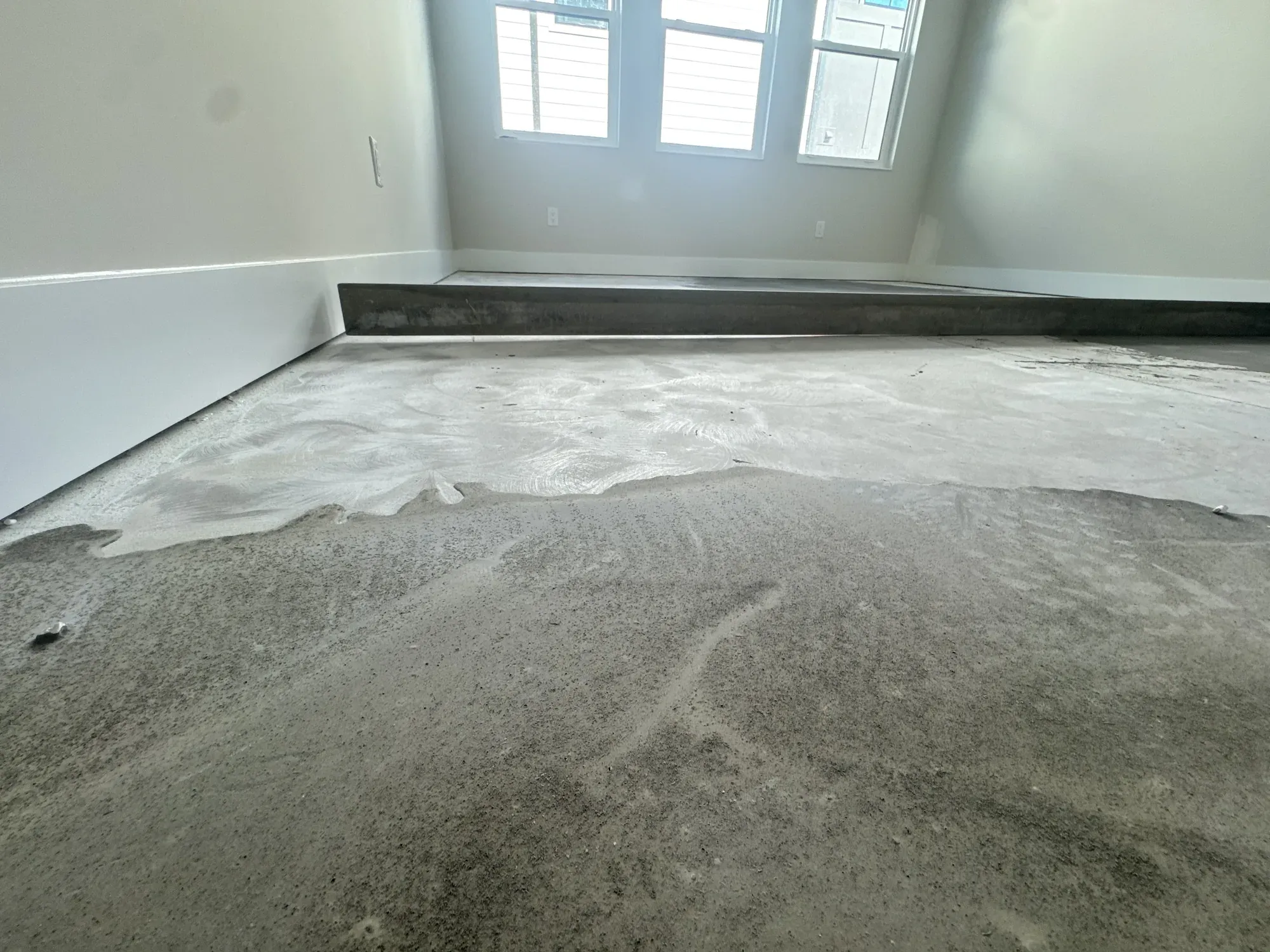
Subfloor prep is everything that happens before the first plank goes down. We check the concrete slab, grind down the high spots, fill the low ones, repair any damage, and install a moisture barrier when the slab needs one.
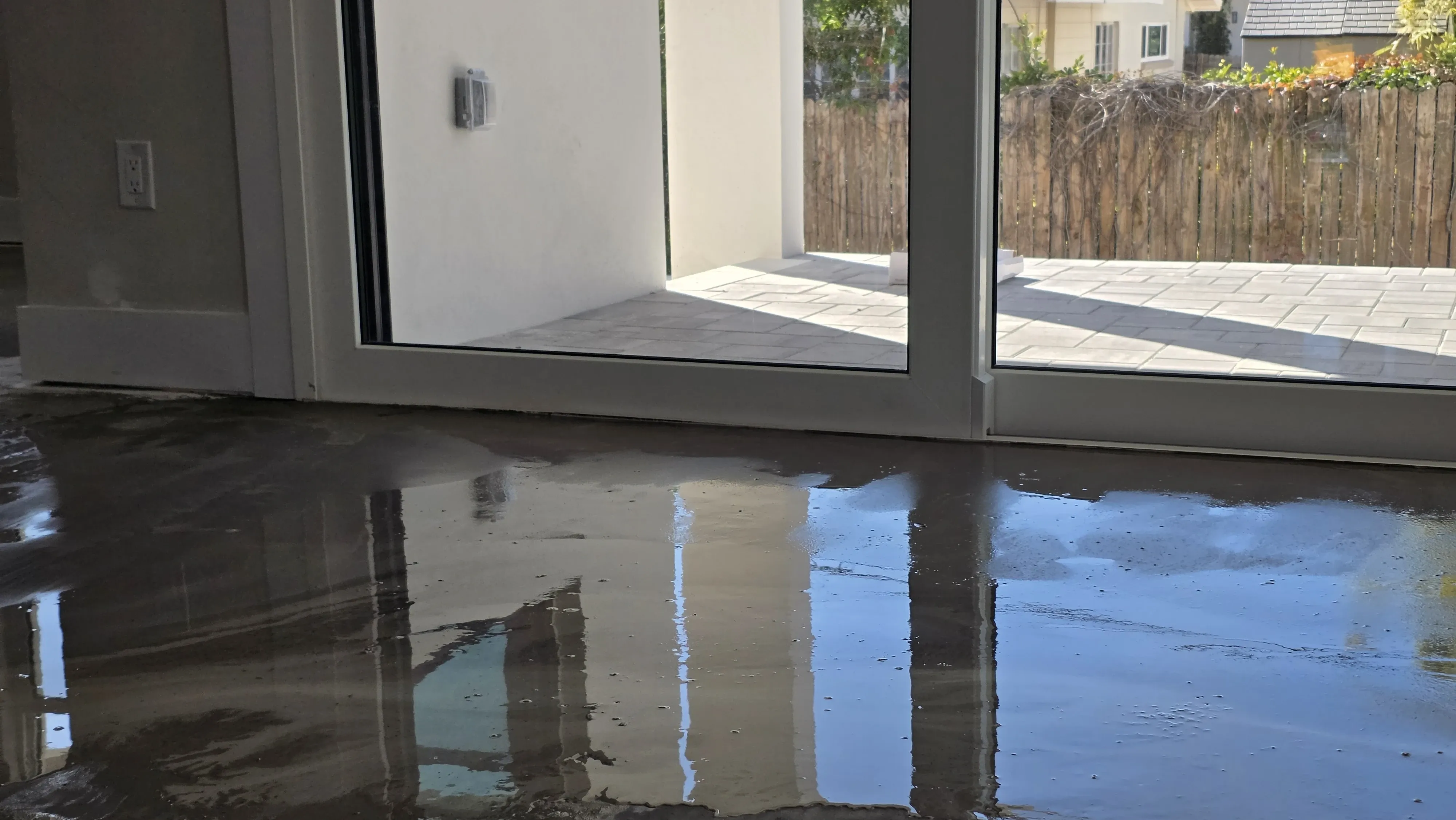
In Florida, this is the step that decides whether a floor lasts for years or starts lifting within months. Our slabs sit on damp ground and that moisture keeps pushing up. No wear layer can stop it.
Here’s one question worth asking anyone who quotes your floor: what did the slab read?
What a skipped check costs.
When moisture comes up through an unsealed slab, the floor doesn’t fail all at once. First the edges cup, then the seams lift and the planks start to separate. By the time you notice, it’s no longer a repair. It means tearing it out and reinstalling with new material, because planks that have lifted rarely lie flat again.
And it isn’t just the floor. It’s moving all the furniture out again, going days without using the room, and paying a second time for work you already paid for.
Checking a slab takes a few minutes. Tearing out a floor can take days.
The most expensive flooring mistake in Florida isn’t picking the wrong plank.
It’s not looking at what’s underneath it.
People spend weeks comparing wear layers, finishes and warranties, and then give the job to whoever quotes lowest, without anyone ever looking at the slab.
And here’s the part almost nobody reads. Your floor’s manufacturer warranty very likely excludes damage caused by moisture coming up from the subfloor. The big laminate manufacturers spell it out clearly. So when a floor lifts because the slab was wet, the manufacturer doesn’t pay for it, and neither does the installer who never checked.
What did the slab read?
Ask it with every quote you get. If they can’t answer, chances are nobody looked.
Three things, on every job, once the room is empty and the old floor is out.
 01
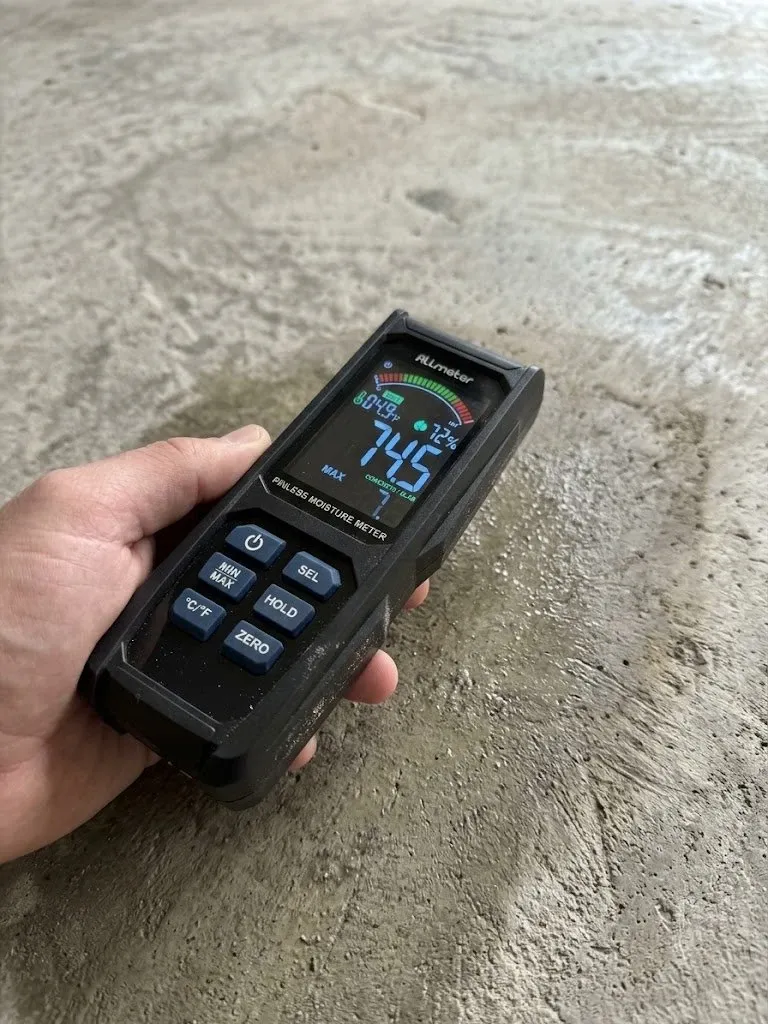
01Moisture at the surface of the slab
We use a pinless meter and check several spots, never just one reading in the middle of the room. Slabs aren’t uniform. The damp corner is usually the one against an outside wall or under a window.
 02
02Flatness
We run a straightedge across the room to find the high and low spots, and compare them with the tolerance your floor’s manufacturer actually publishes, not a rule of thumb.
 03
03Cracks and damage
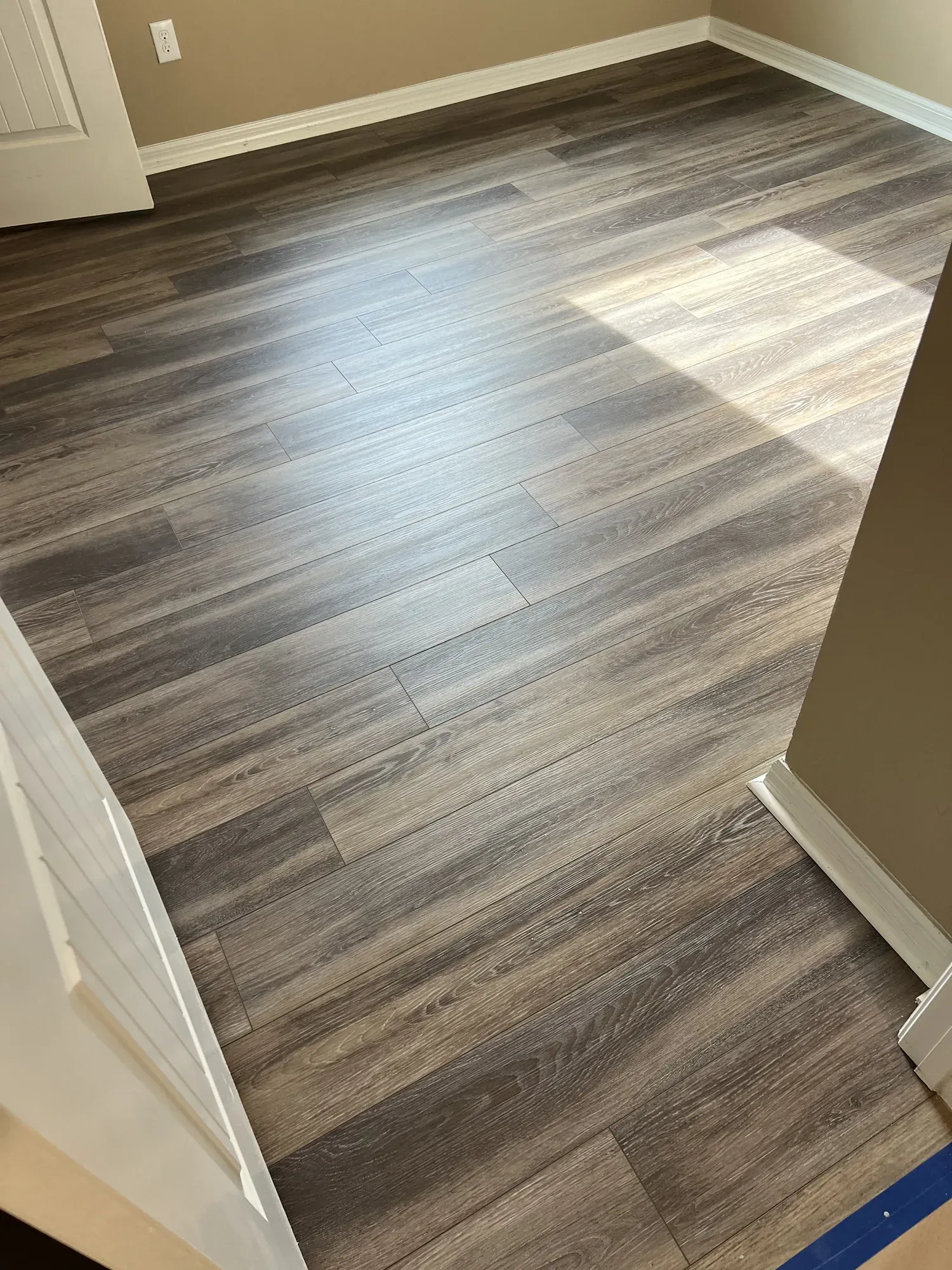
We look at them and tell you what we see before anything gets covered. A crack that moves will show through a floating floor within a year.
We tell you what we found right there, and what it means: it’s ready to install, it needs some prep, or there’s something to fix before anything goes down.
What we do about it.
Subfloor work is part of your flooring job and gets quoted with it. We don’t offer it as a separate service.
Grinding and leveling
We grind down the high spots and fill the low ones with leveling compound. Labor starts at $1 per square foot.
If it’s skipped: spots that feel hollow when you walk on them, and a locking system straining against a gap it was never built for.
Crack and damage repair
We fill and stabilize them before anything goes on top.
If it’s skipped: the crack eventually shows through the finished floor.
Moisture barrier
When the slab needs it, we install it under the floor as part of the same job.
If it’s skipped: the slab keeps pushing moisture up, and the warranty that would have covered your floor stops covering it.
Cement board over wood subfloor
For tile over a wood subfloor. A rigid, stable base is what separates grout that holds from grout that cracks. Labor starts at $1 per square foot.
If it’s skipped: tile set on a floor that flexes. That’s the most common reason tile cracks in a house that never moved.
Our warranty, and what it doesn’t cover.
The one-year warranty covers our workmanship
The prep we did and the floor we installed over it: leveling that holds, transitions set right, and tile that doesn’t fail because of our work.
Your slab was there before we arrived, so we can’t warranty it. What we do is check it.
Nobody can warranty a slab they didn’t pour. What we can do is look at it before we quote and tell you what we find. That’s really what this whole page is about.
If the slab comes back outside range, we price the fix
We’ll suggest how to fix it and give you a price. If you’d rather install anyway, you sign a waiver that stays in your file.
The warranty doesn’t cover manufacturer defects, normal wear, floods or leaks, storm damage, impacts and scratches, or the building moving after installation. We’ll give you the full text before you sign.
Frequently asked questions
How do you check a concrete slab before installing?
We check three things: surface moisture with a pinless meter in several spots, flatness with a straightedge against the manufacturer’s tolerance, and any cracks or damage. We do it before we price the job, on every job.
How long does a concrete slab take to dry?
About three to four months for a four-inch slab in typical conditions, according to the Journal of Light Construction. The clock starts once the surface is dry, not when the concrete was poured. The old “one month per inch” rule gives you a rough number. Checking the slab gives you the real one.
Can you install flooring over a damp slab?
Not until the moisture is dealt with. A moisture barrier goes between the slab and the floor so that whatever comes up through the concrete never reaches the planks. Which barrier to use, and whether one is enough, depends on what the slab shows.
Does subfloor prep cost extra?
Checking the slab is part of putting your estimate together, and we don’t charge for it. The prep work itself is priced based on what the slab needs. Leveling starts at $1 per square foot, and the full price list is on the installation page.
My floor is lifting at the seams. Is it moisture?
It’s the most common cause in Florida, but not the only one. A floor installed tight against the wall, with no room to expand, does the same thing. The two look alike but get fixed differently, so it’s worth having someone take a look before you pull anything up.
Do I need this on a second floor?
The risk is different, but it’s still there. Over a wood subfloor, what matters is how firm it is, how much it flexes and how much moisture the wood itself holds. A floor that gives under your feet will fail no matter what you put on it.
Find out what your slab reads.
Send us a photo of the room and we’ll give you a price range. When you’re ready for a firm estimate, we come check the slab for free, before anyone gives you a final number.