Subfloor & Moisture
8 articles
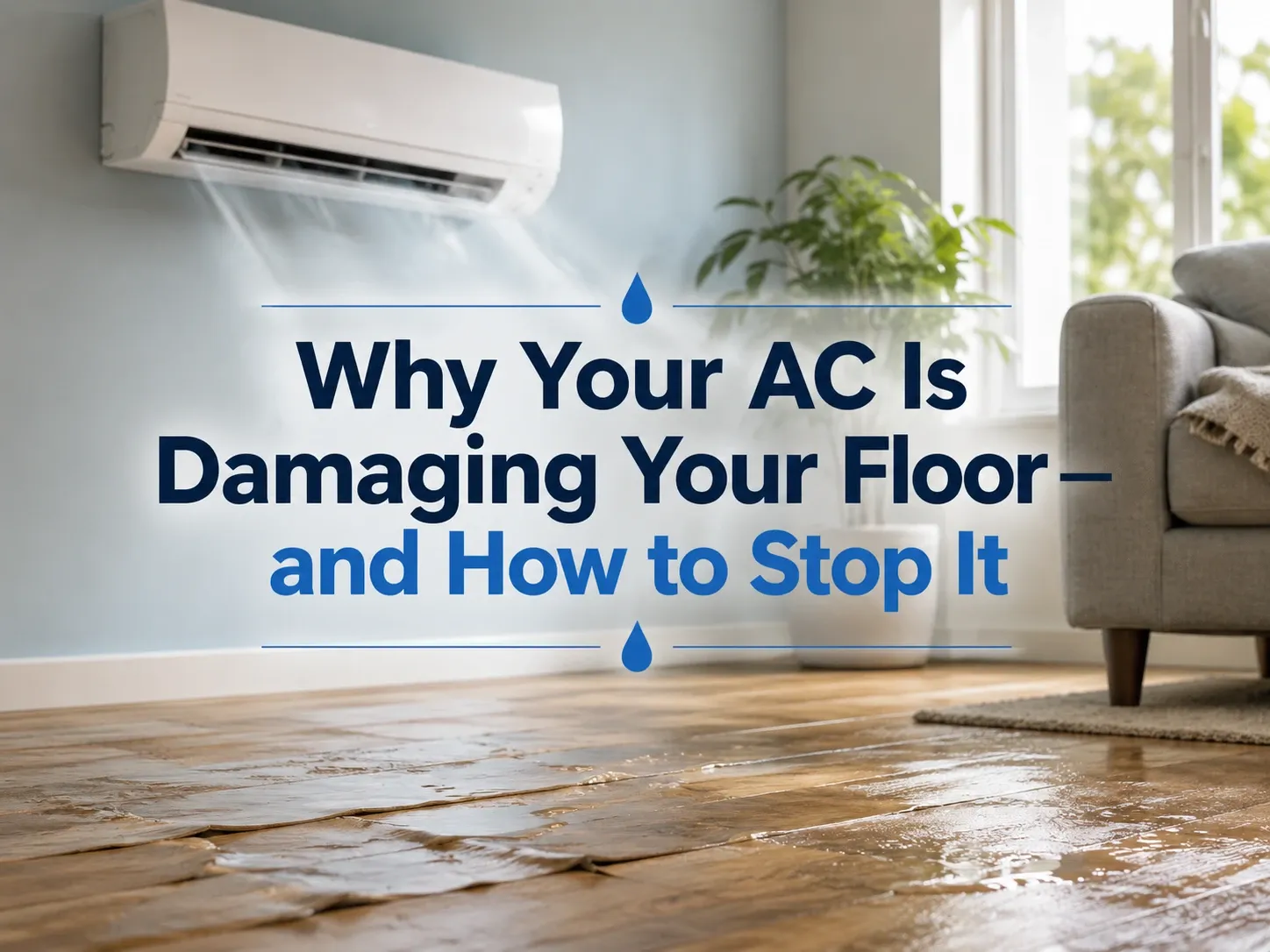
Why Your AC Is Damaging Your Floor — and How to Stop It
Air conditioning cycles cause daily humidity swings that crack, gap, and cup wood-based flooring in Tampa Bay.
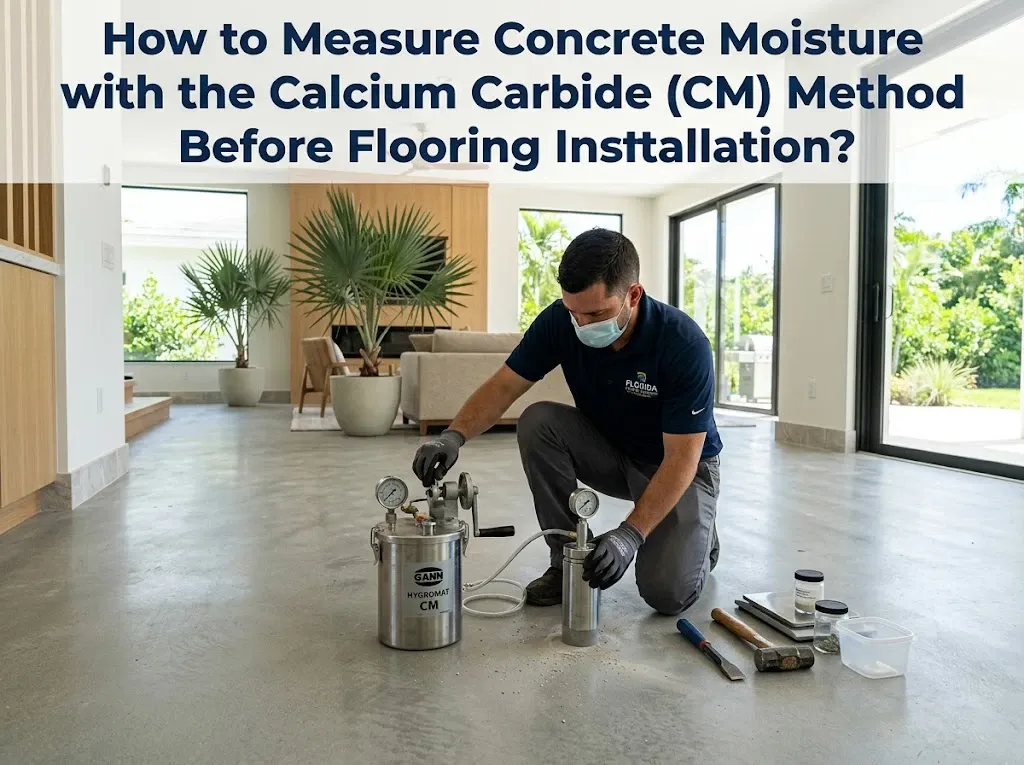
How to Measure Concrete Moisture with the Calcium Carbide (CM) Method Before Flooring Installation
The CM method is the only accurate test for deep-core moisture in concrete slabs. Learn why Tampa Bay floors depend on it before laminate installation.
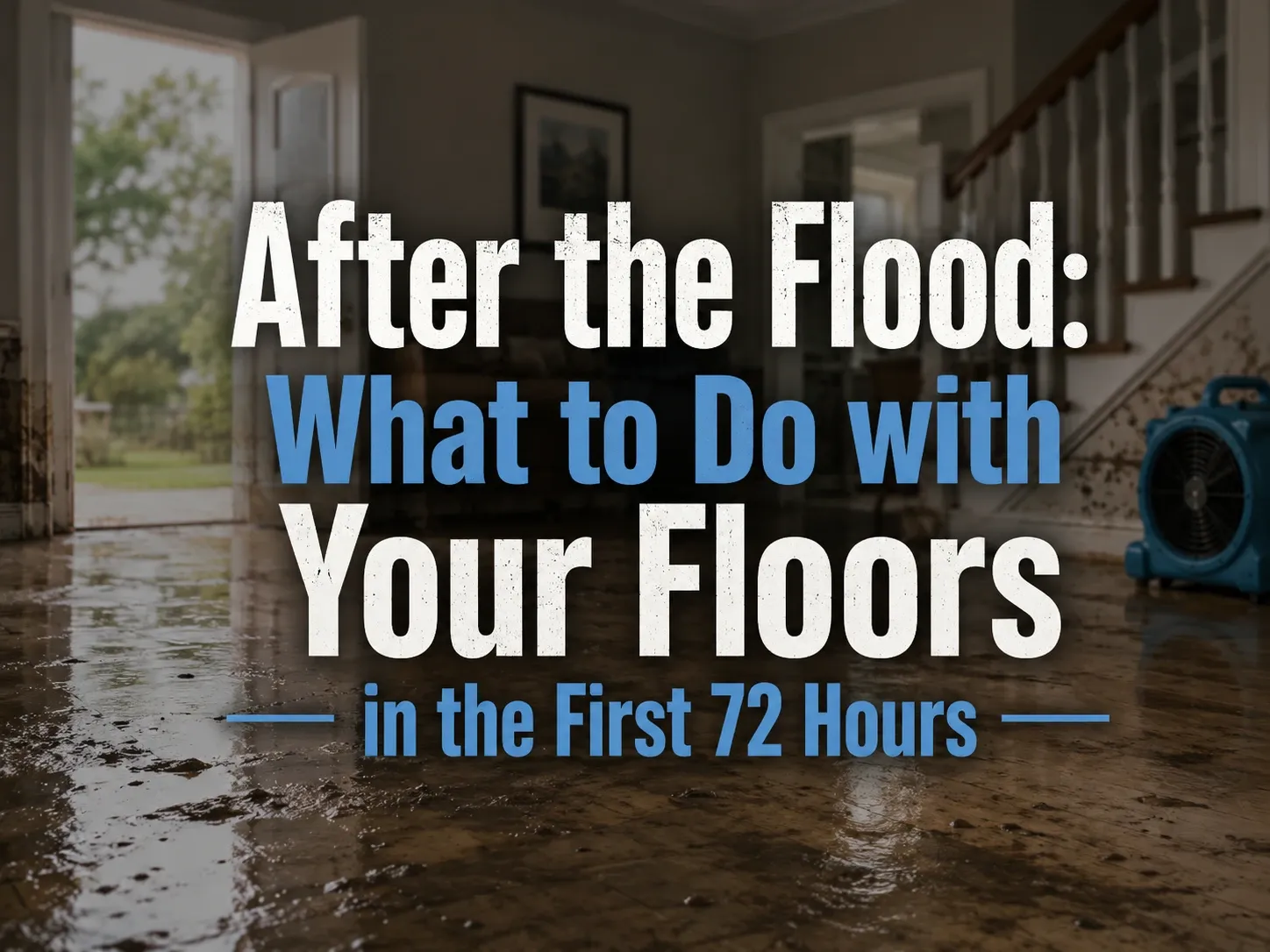
After the Flood: What to Do with Your Floors in the First 72 Hours
The first 72 hours after a flood decide whether Tampa Bay floors can be saved: which materials survive, the mold timeline, insurance steps and costs.
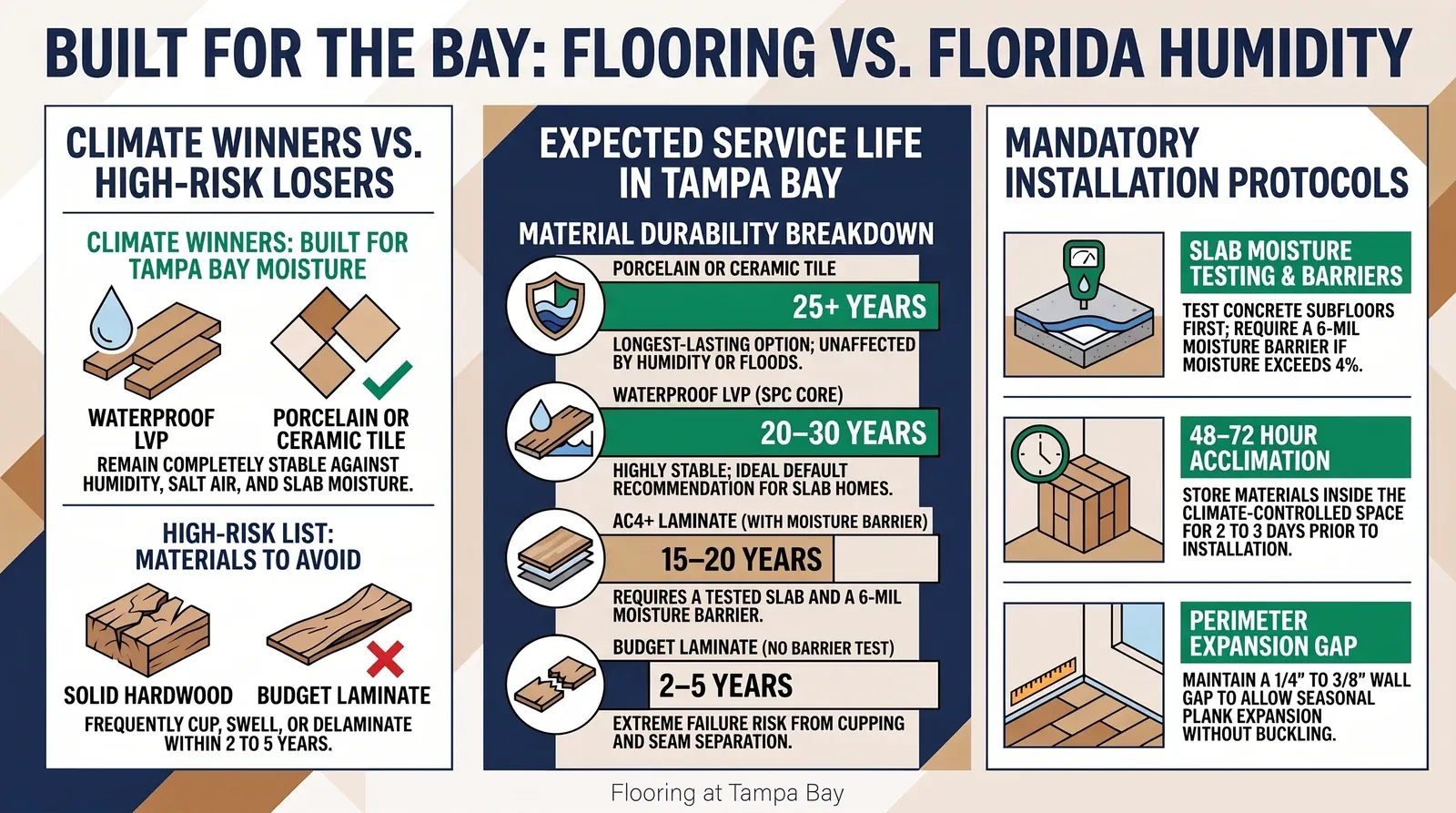
How Florida Humidity Destroys the Wrong Flooring — and What Actually Survives in Tampa Bay
Florida humidity and A/C cycling destroy the wrong flooring fast. Learn which materials survive in Tampa Bay homes from professional installers.
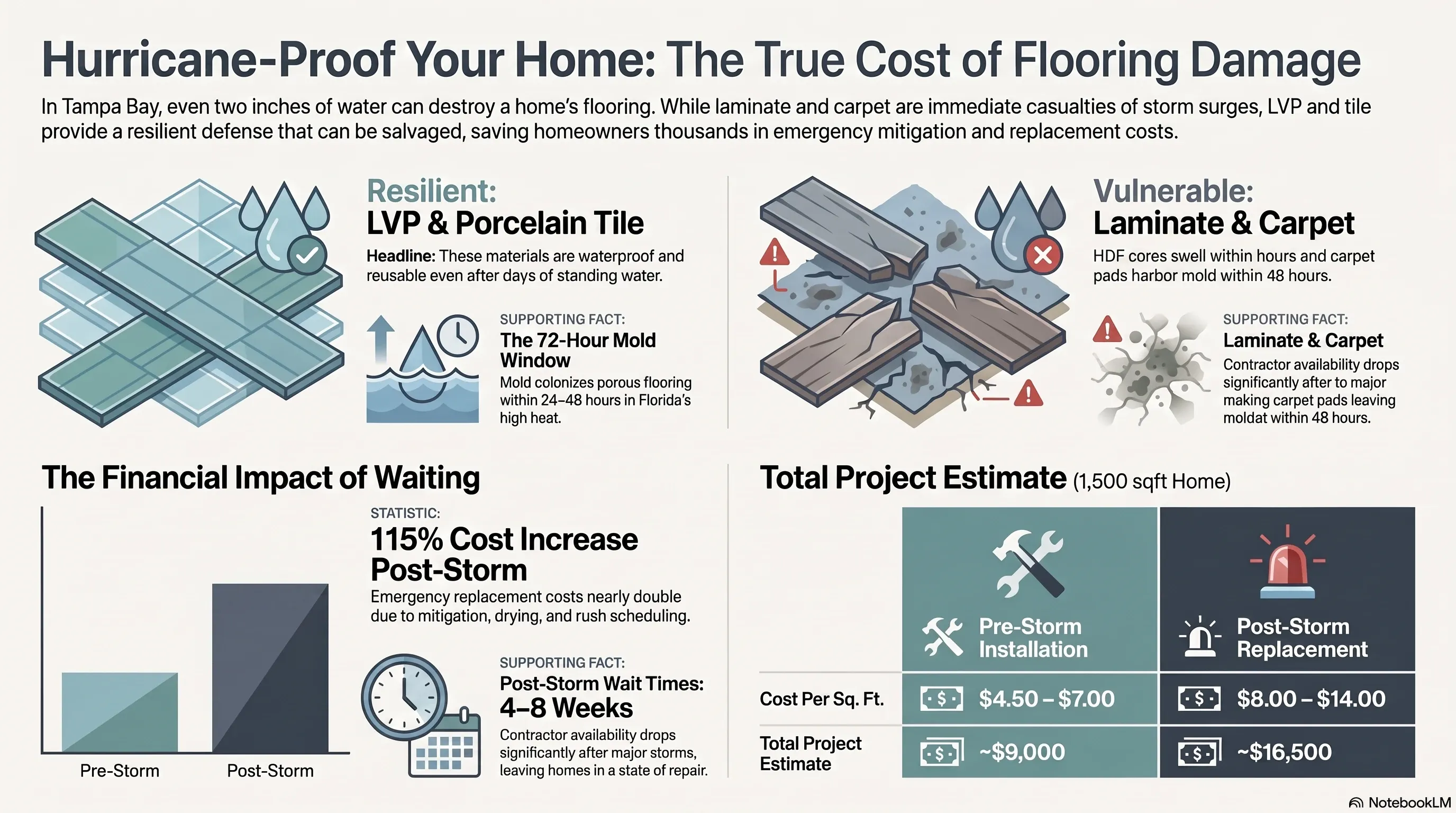
Hurricane Season and Your Floors: What Tampa Bay Homeowners Need to Know Before June
Hurricane season starts June 1. Learn what happens to laminate, LVP, tile, and carpet when water enters your Tampa Bay home.
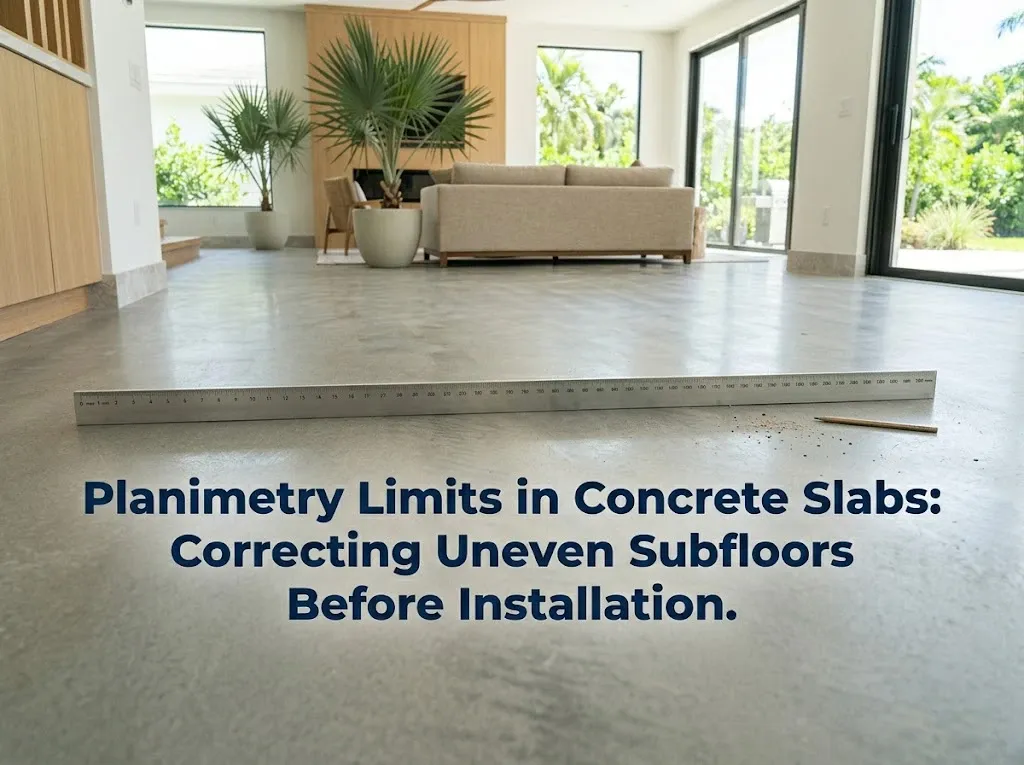
Planimetry Limits in Concrete Slabs: Correcting Uneven Subfloors Before Flooring Installation
Concrete slabs must meet a 3 mm / 1 m flatness tolerance before laminate installation. Learn the correction methods that prevent creaks and joint damage.
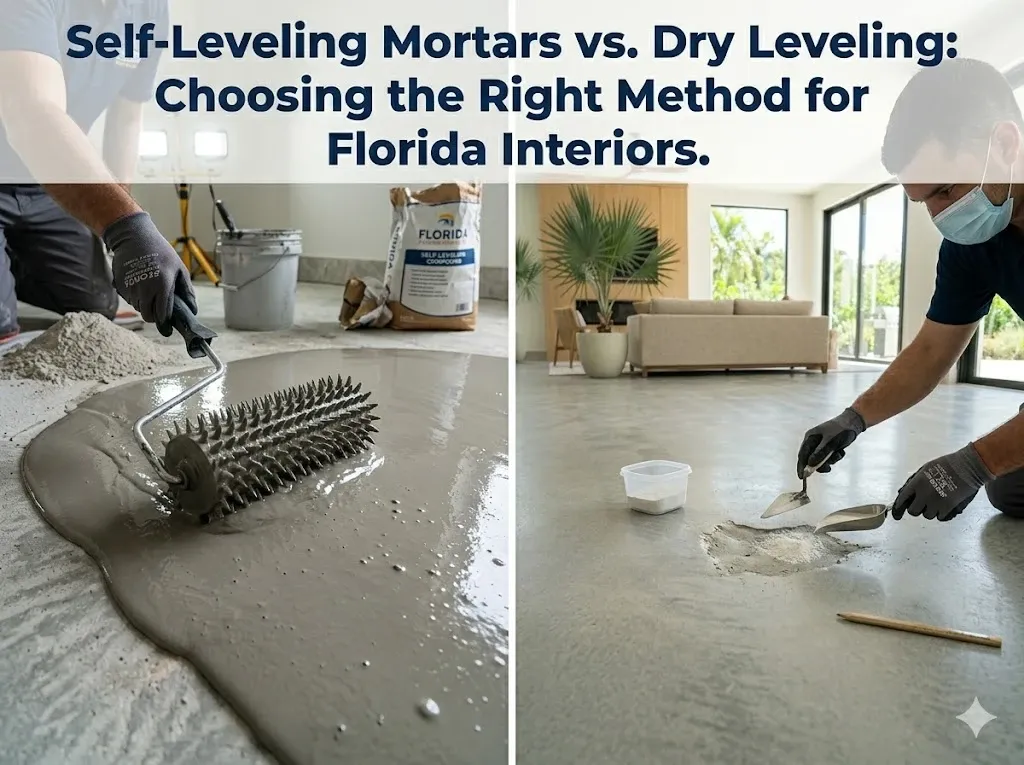
Self-Leveling Mortar vs. Dry Leveling: Choosing the Right Method for Florida Subfloors
Self-leveling mortar fixes widespread slab depressions; dry leveling handles localized dips without adding moisture. Learn which method suits your project.
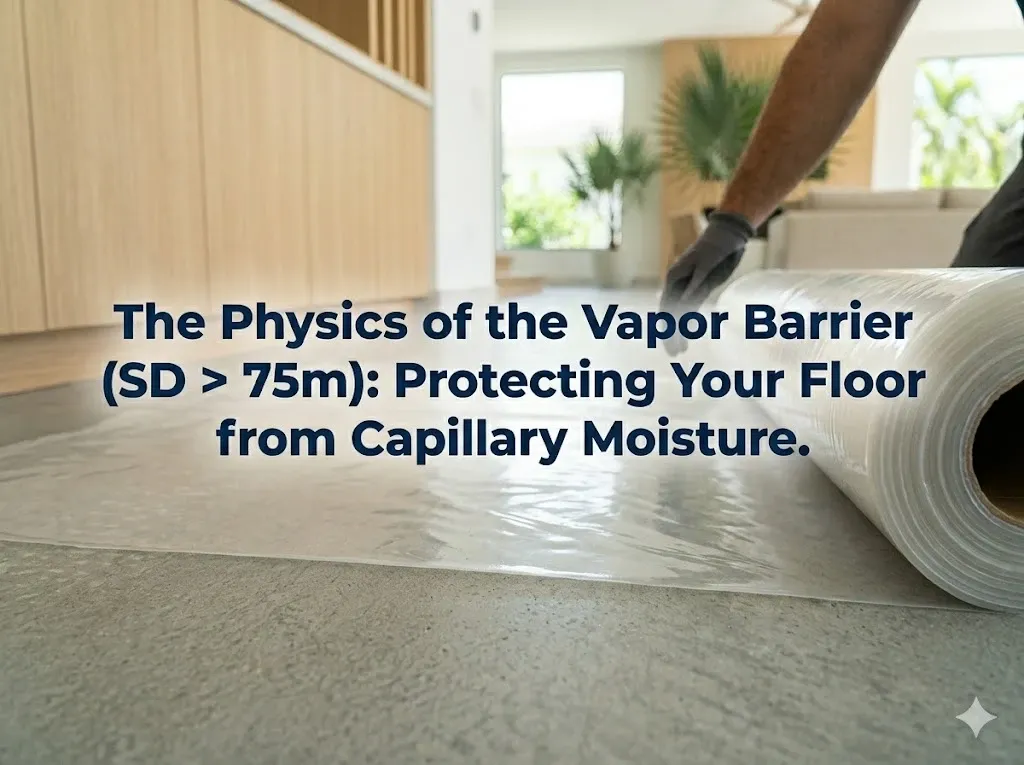
The Physics of the SD > 75 m Vapor Barrier: Protecting Floors from Capillary Moisture
A vapor barrier rated SD > 75 m is mandatory between concrete slab and laminate. Learn the science that protects Tampa Bay floors from ground moisture.